Matières Volatiles
Feathers are light, insulating and produced in large quantities, yet their irregular structure makes them difficult to reuse in conventional manufacturing. Developed during my Master’s at ENSCI–Les Ateliers, Matières Volatiles explored a practical question: could waste feathers be transformed into a material whose properties a designer could tune, shape and apply?

My contribution
Material research · Experimentation · Mould design · Prototyping
The team
Independent research project
Year
2017
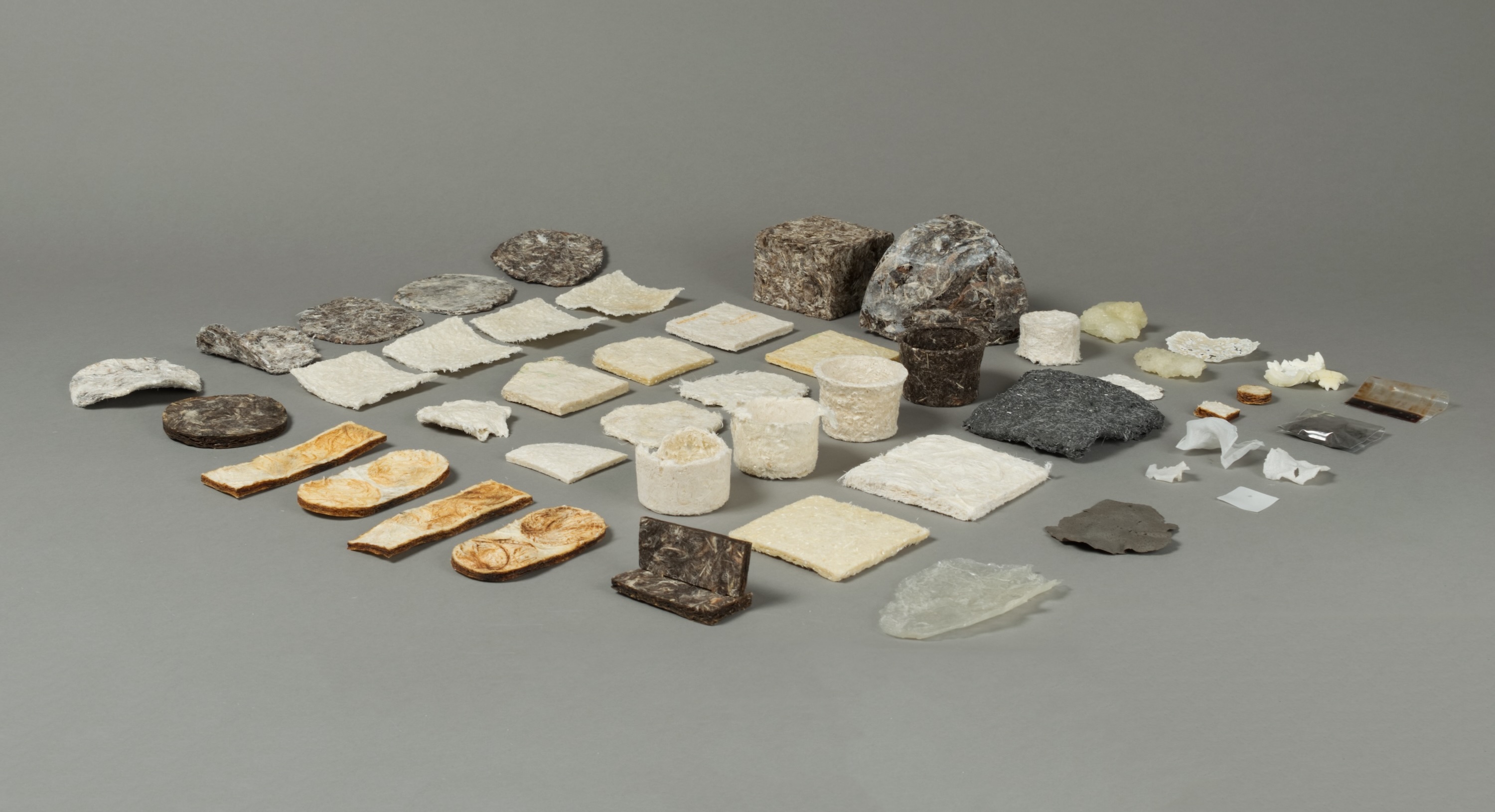
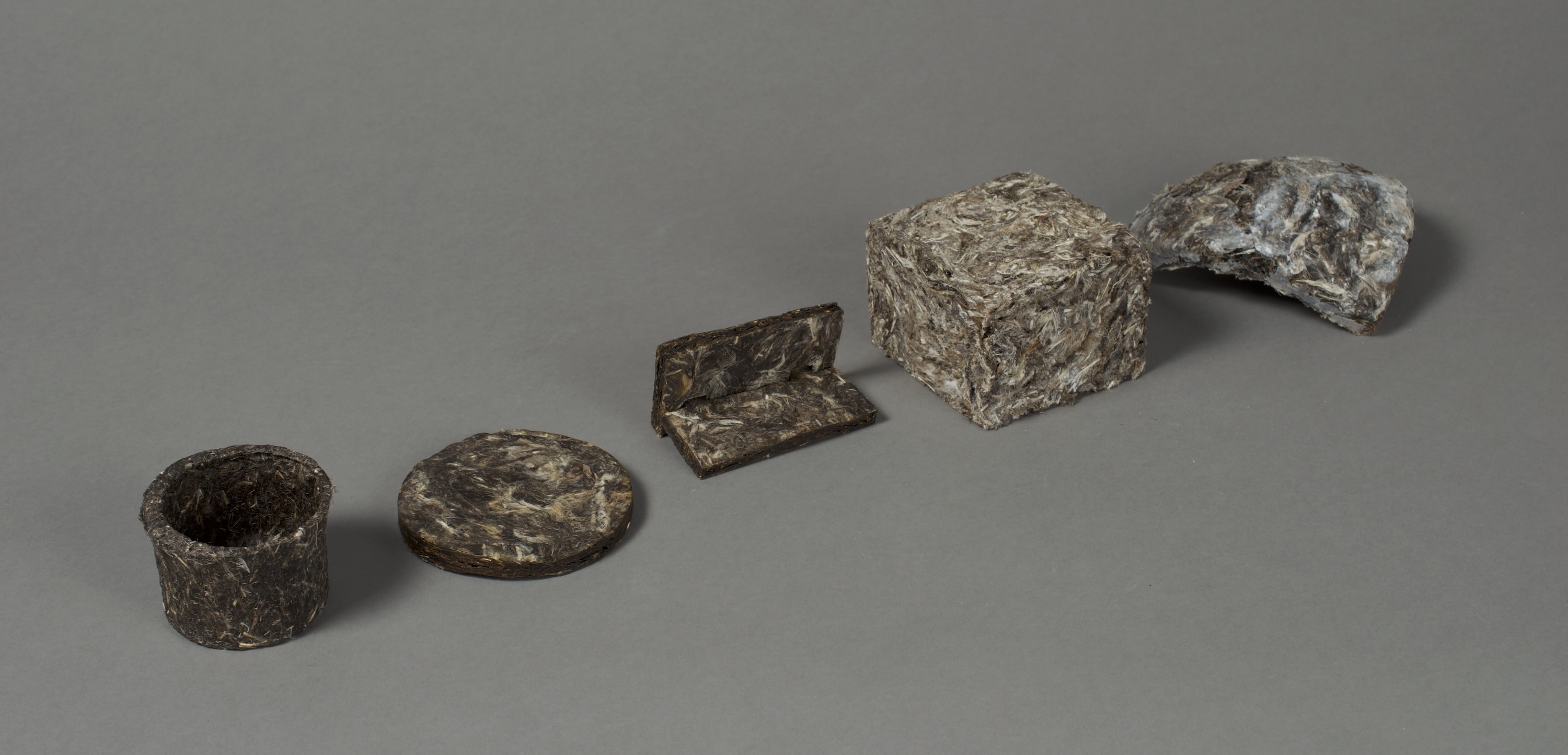
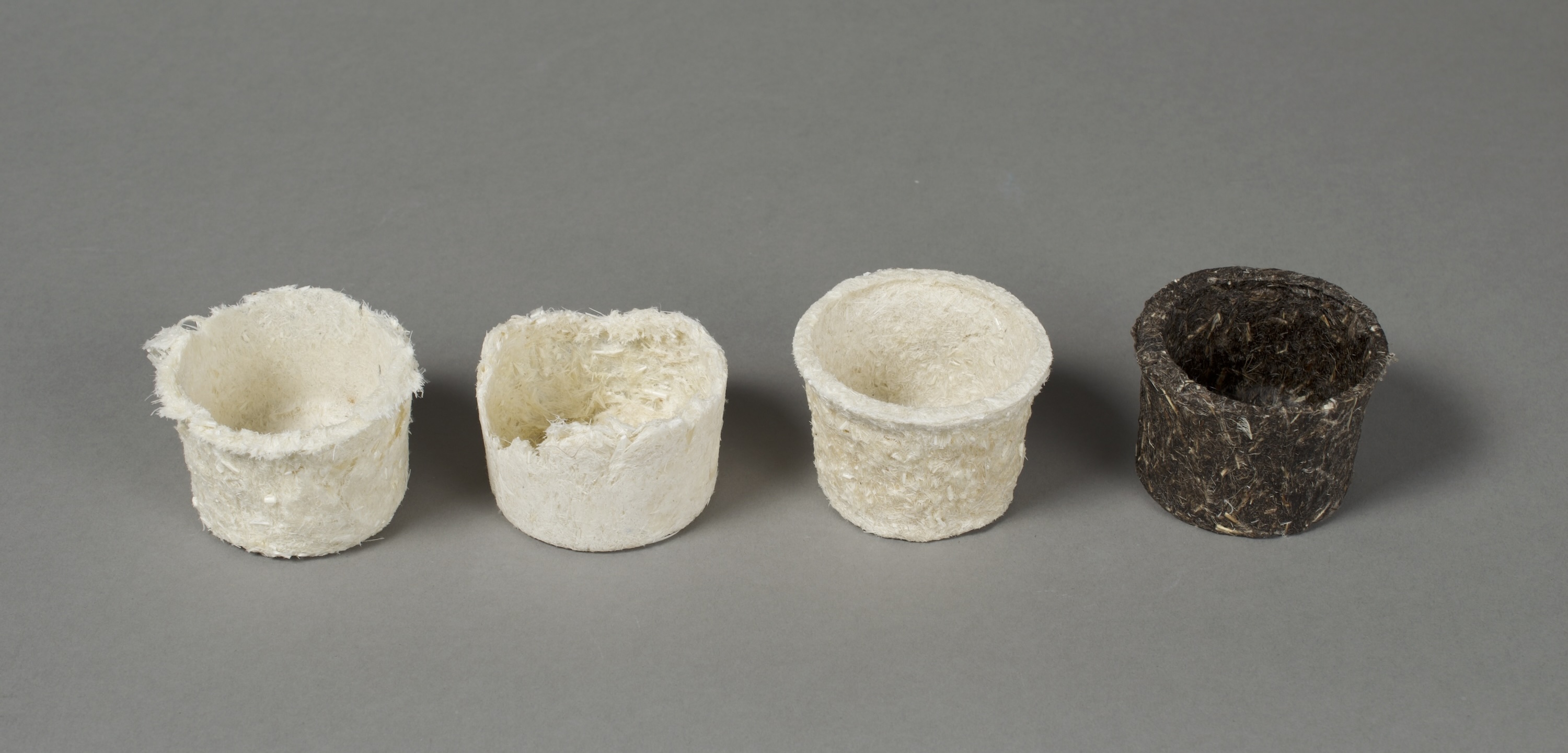
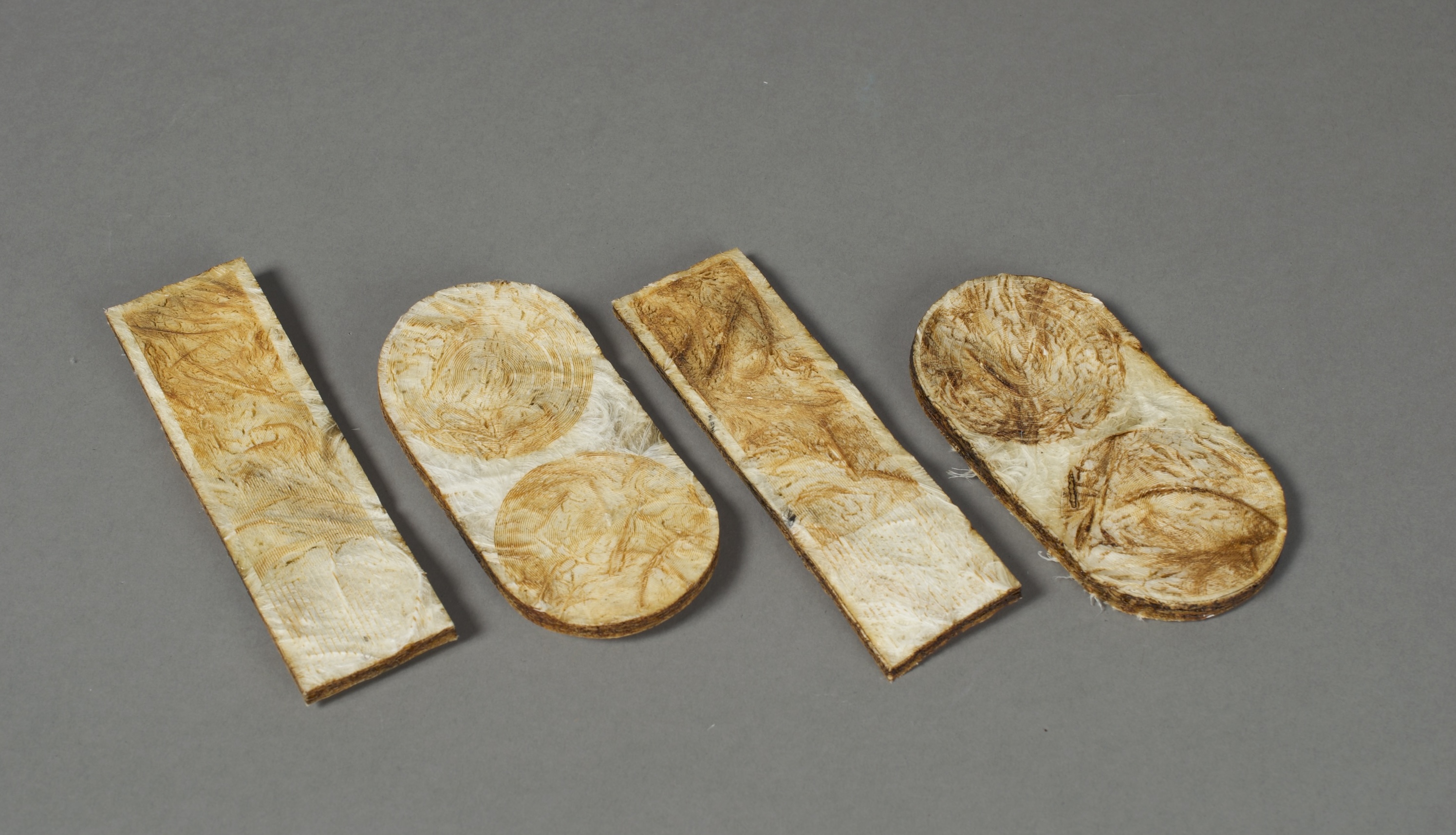


Start with the material, not a predetermined object
I began through hands-on tests rather than choosing a product first. Feathers were sorted, cut, compressed and combined in different ways to understand how fibre type and processing changed the result.
Choose a simple bio-based binder
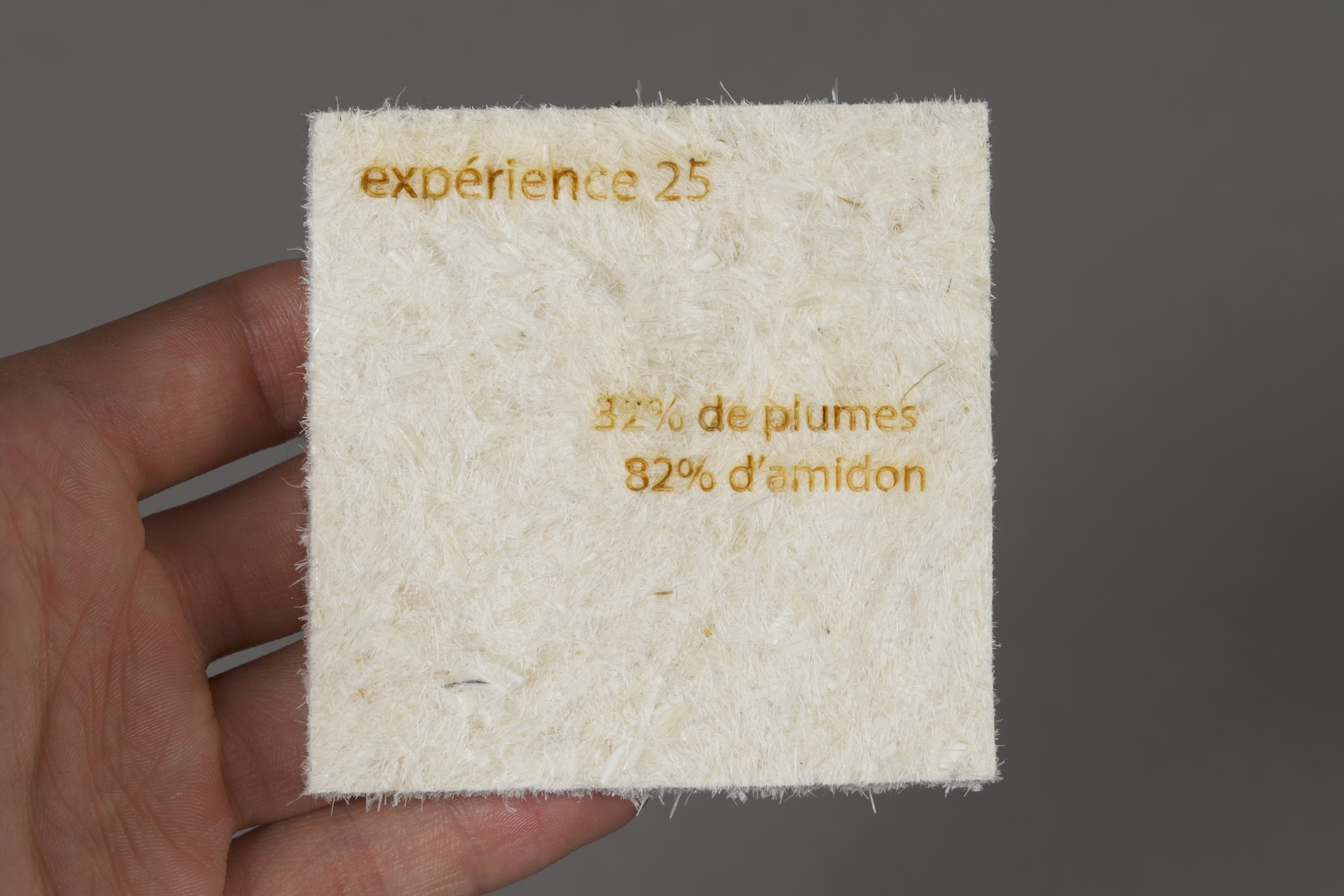
A starch-based binder created a composite that could hold a shape while keeping the feathers visible. The formulation provided a useful base for exploring density, rigidity and surface character without disguising the origin of the material.
Tune properties through process
Changing feather type, proportion, pressure and moulding conditions produced outcomes ranging from light and flexible to compact and rigid. The project therefore became a family of possible materials rather than one fixed recipe.
Use prototypes to expose limits
Sheets and moulded forms tested potential directions for packaging and furniture. They demonstrated formability while also making clear what still required development: repeatability, durability and a viable industrial waste stream.
Outcome
The research produced a mouldable feather-and-starch composite, a library of samples and functional demonstrators.
It was an exploratory material project, not a market-ready substitute for plastic. Its value lies in making an overlooked waste stream tangible and in showing how industrial design can use prototyping to investigate both opportunity and limitation.