Maïa Travel
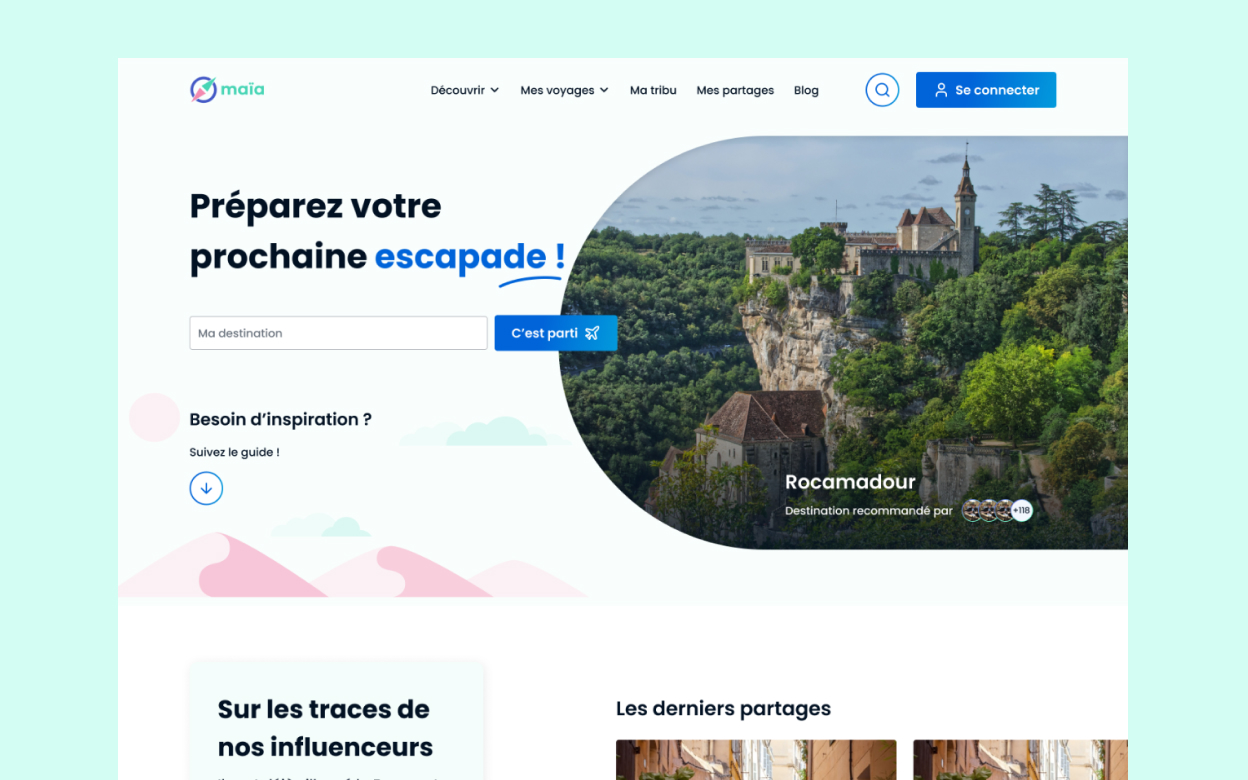
AI can generate a trip quickly, but speed alone does not make a travel plan trustworthy. Maïa Travel needed to collect enough preferences to produce relevant recommendations while keeping users in control of budget, transport, accommodation and activities. At Wolfox, I led the UX research and wireframing for the main journeys, working with two UI designers and an external development team.
My contribution
UX research · Journey design · Wireframing · Product coordination
The team
1 UX designer 2 UI designers
Year
2022

Define what the AI actually needs
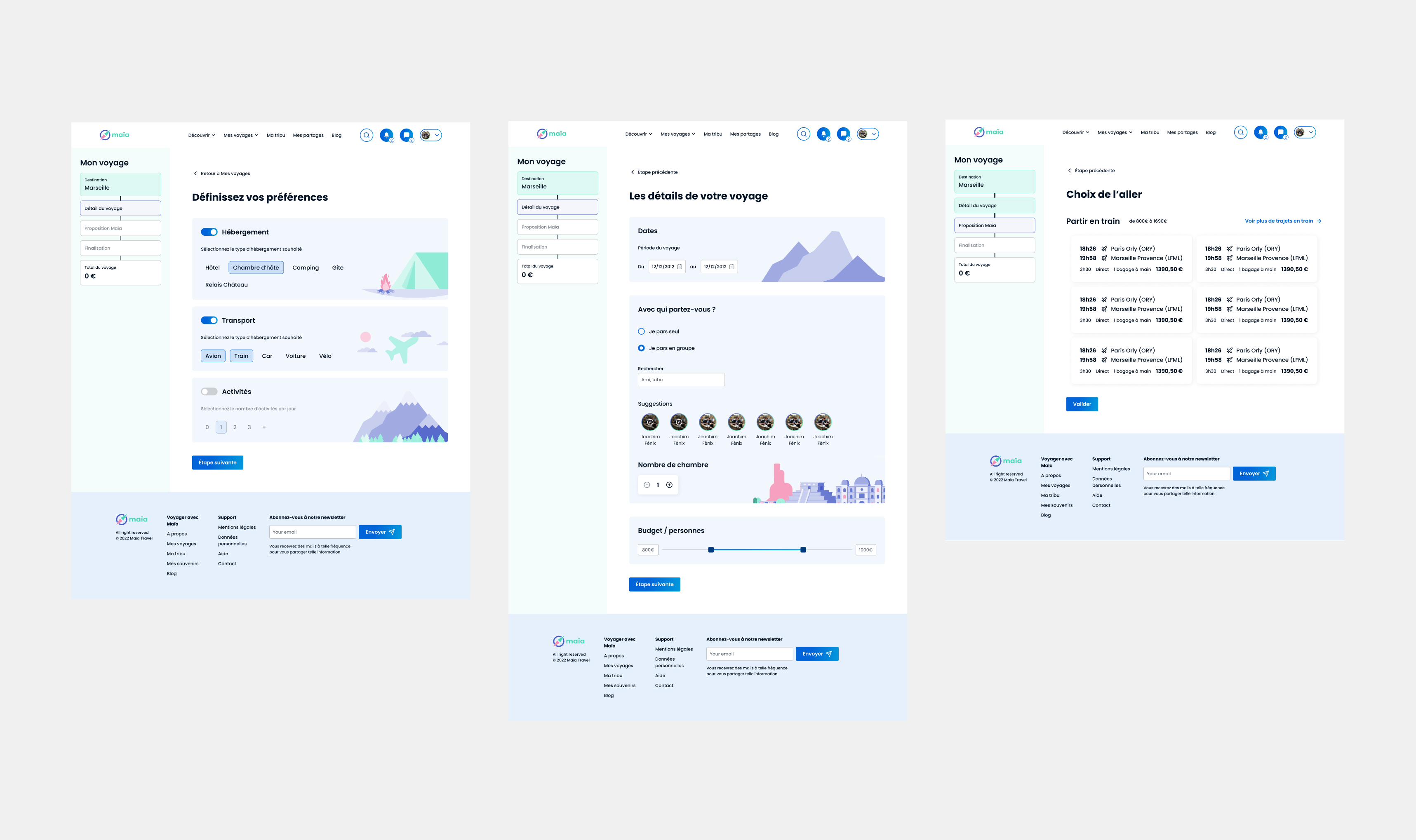
The recommendation journey depended on precise inputs. I worked with the technical team to define which preferences were meaningful, then organised them into a questionnaire that felt progressive rather than exhaustive.
Keep automation reversible
The experience needed to support both AI-assisted planning and manual choices. We designed the generated itinerary as a proposal users could review and adjust, preserving agency instead of turning the algorithm into a black box.
Validate structure before visual direction
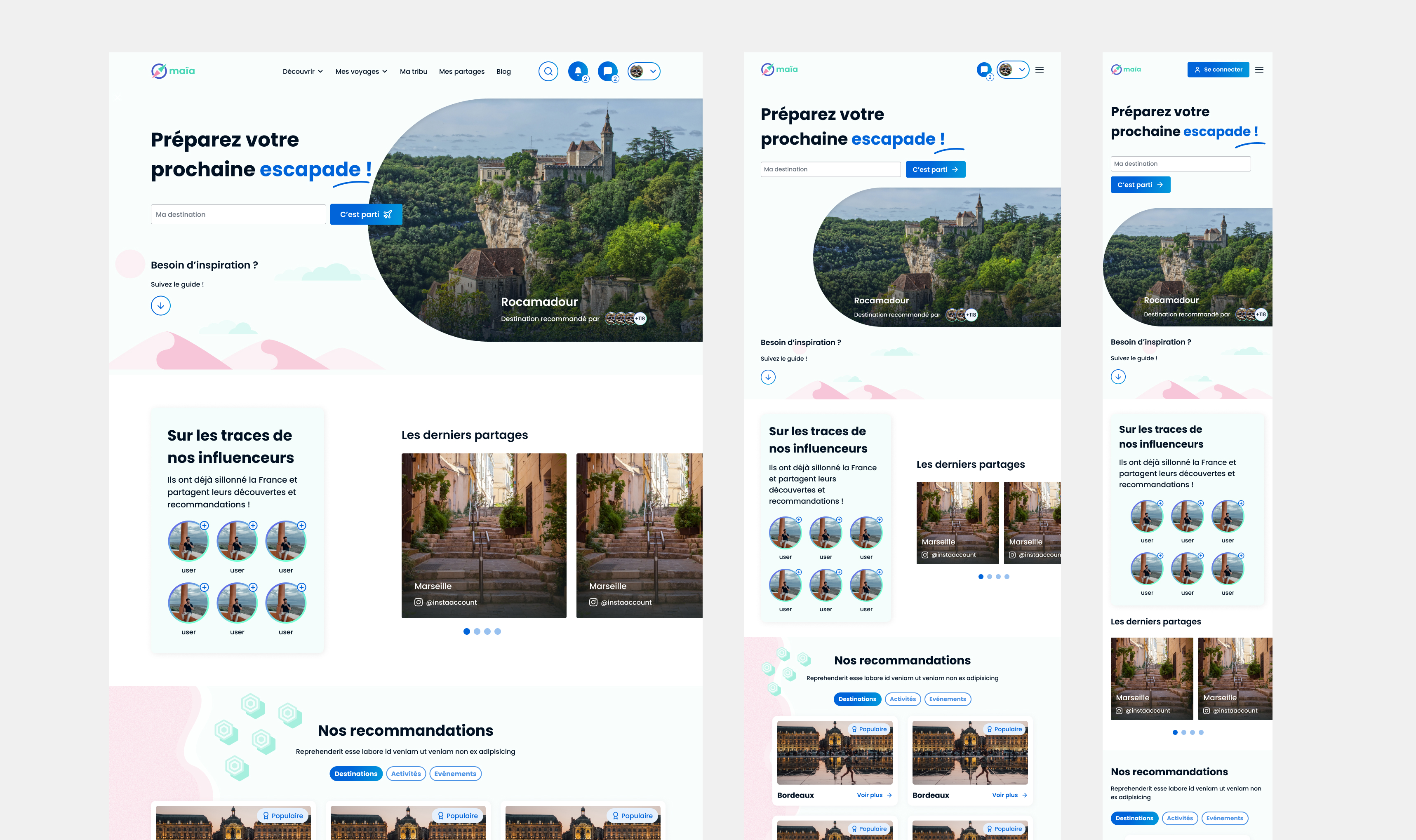
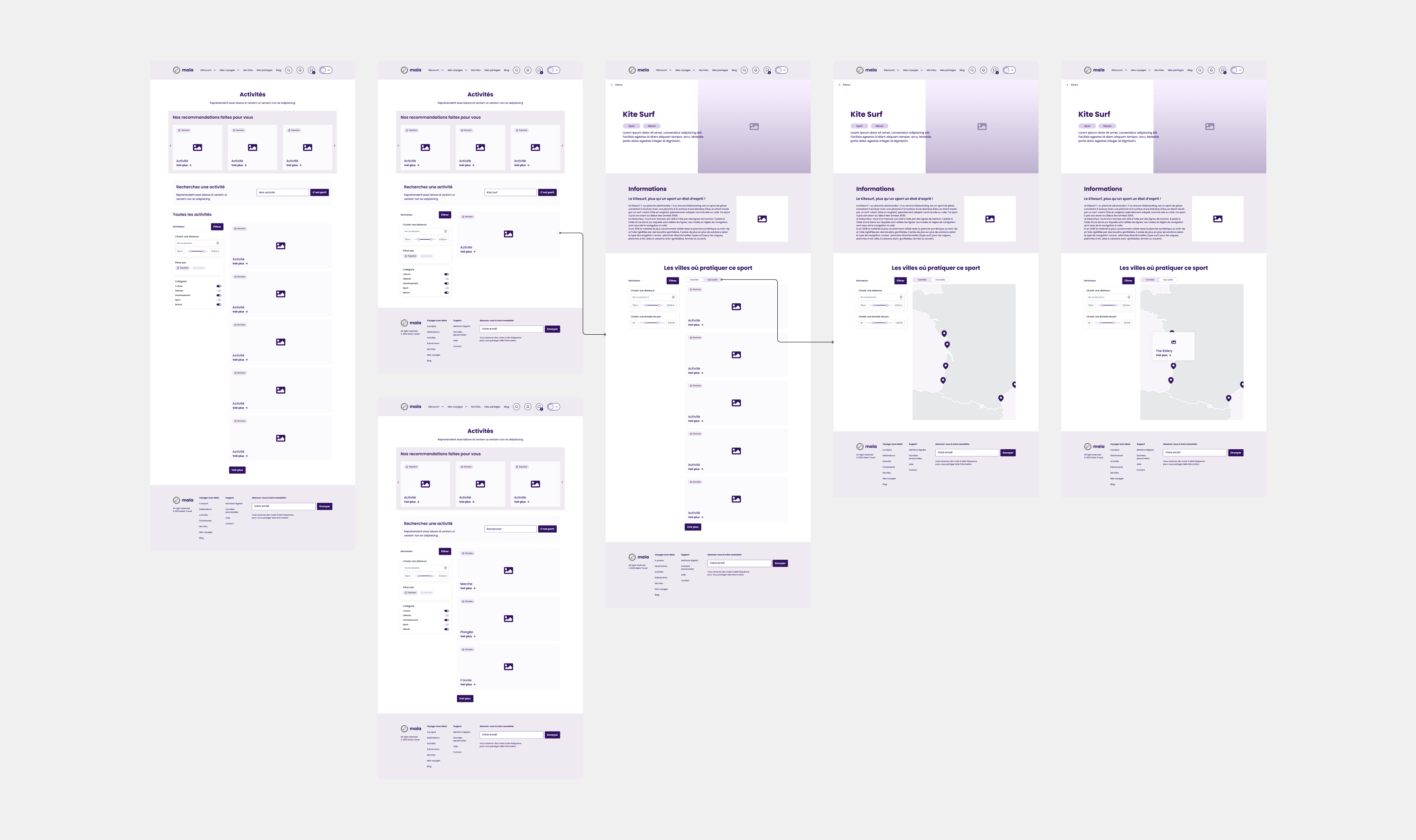
Wireframes covered the complete journey and helped the client and developers agree on dependencies early. The UI team then explored several visual directions and converted the selected one into reusable components.
Design in buildable releases
We separated the work into relatively independent batches: the presentation site, core booking flows and the AI-assisted journey. This reduced integration risk and gave the external team clearer handoffs.


Outcome
The project produced validated journeys, complete wireframes and a reusable visual system for the travel-planning experience.
Maïa Travel is live today with both AI-assisted and manual planning. Users can define a profile, generate a tailored trip and adjust its components. The live service confirms that the central product model was implemented; it does not by itself quantify the impact of individual design decisions.
It demonstrates how I approach AI-enabled products: make the system’s inputs understandable, preserve user agency and organise the design so it can be built in realistic stages.