Cegos
A self-enrolled learner, a company-sponsored learner and a trainer do not approach education with the same goals. Cegos needed one digital learning platform that could support all three without becoming three disconnected products.
At Wolfox, I led the UX/UI design in collaboration with Cegos and Moodle specialist Edunao. The challenge was to clarify a complex training hierarchy, respect Moodle’s technical model and turn the Cegos brand into a flexible interface system.
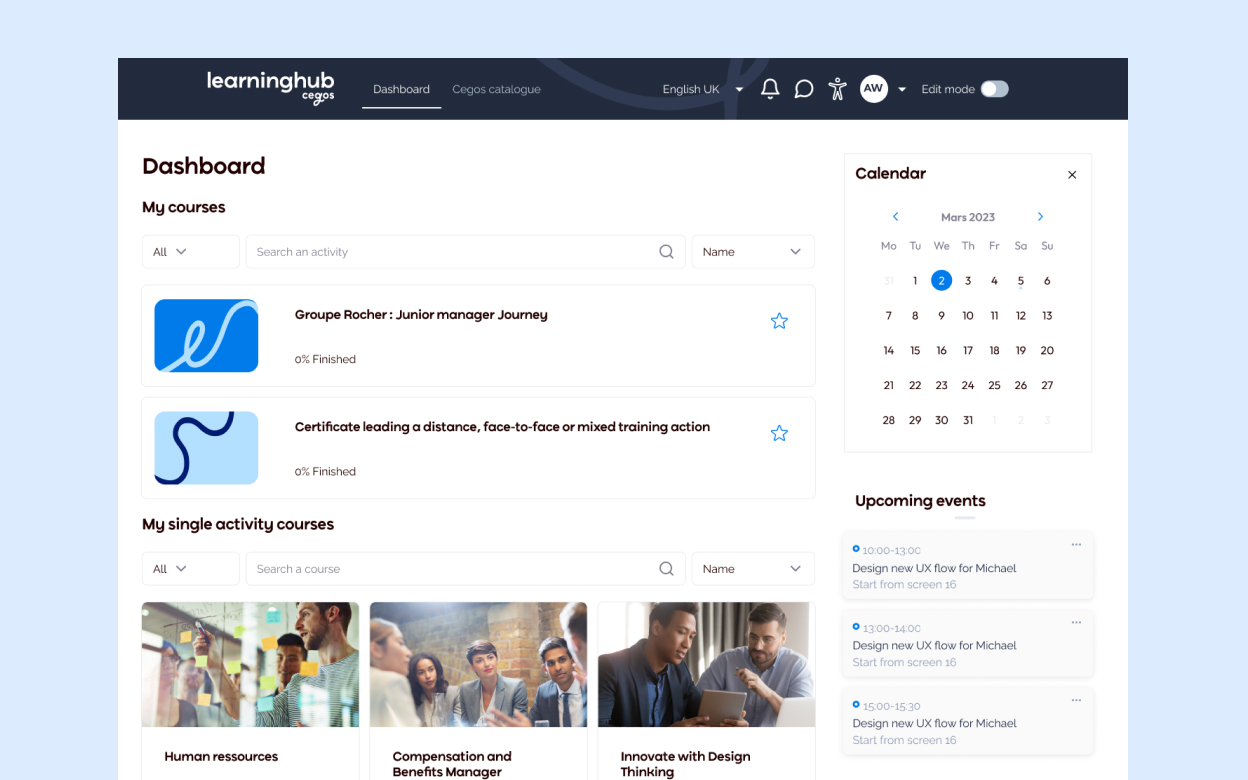
My contribution
UX research · Workshop facilitation · Product design · UI system
The team
1 product designer 1 front-end engineer 1 project manager
Year
2022-2023
Three audiences, one platform
I facilitated a workshop around three key profiles: INTER learners enrolling individually, INTRA learners sponsored by their company, and TRAINER users moving between teaching and learning. Mapping their journeys exposed where their expectations diverged, and where a shared structure could reduce complexity.

Build the shared hierarchy before the visual design
The difficult part was not producing screens; it was making the relationship between training programmes, courses, activities and guided paths understandable. I designed a common information model and navigation system that could adapt to each profile while preserving the same mental map.

Work with Moodle, not against it
Rather than design an idealised interface that would be expensive to implement, I started with a wireframe kit based on Moodle’s existing patterns. We customised the moments that mattered most to learners while keeping the underlying system technically realistic for Edunao.
Turn the brand into a product system
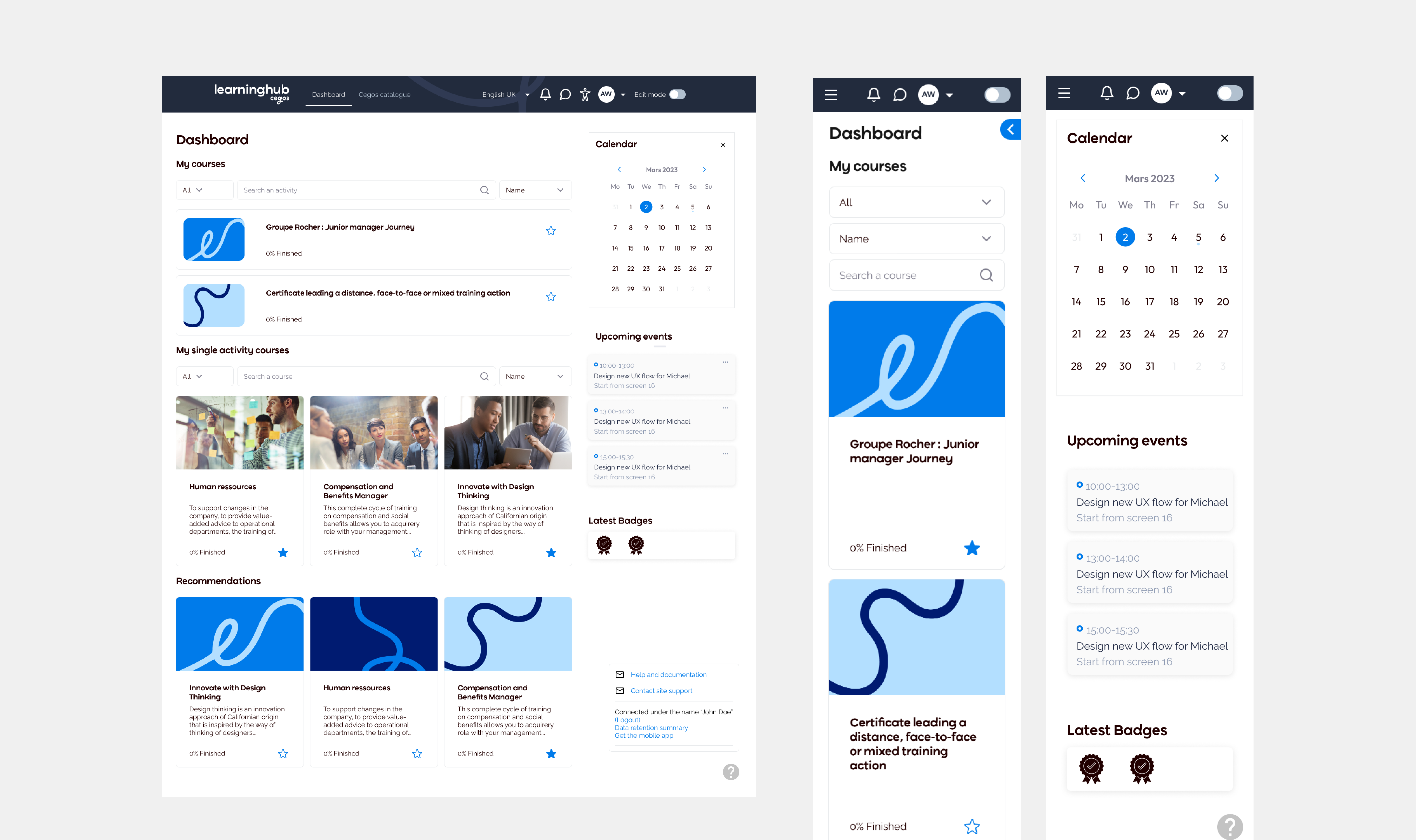
I translated Cegos’ visual guidelines into modular components, accessible type and colour choices, and flexible themes for varied learning content. The system was designed to remain coherent across dashboards, course pages and different screen sizes.

Make the handoff executable
Once the structure and art direction were validated, I produced responsive high-fidelity screens and documented the component behaviour. The result gave the implementation team a concrete system rather than a collection of isolated mockups.

Outcome
The project delivered a complete UX/UI foundation for the learning platform: mapped journeys for three user profiles, a Moodle-compatible wireframe system, a responsive component library and high-fidelity reference screens.
The key result was coherence. Different roles and learning contexts could retain their specific needs without fragmenting the product experience or creating an unrealistic implementation burden.
The wider Cegos–Edunao platform now supports more than 55,000 active users, demonstrating the scale at which this learning ecosystem operates.
This project demonstrates how I work inside complex technical constraints: understand the system, decide where customisation creates real value, and give design and engineering a shared language.