ADP
Airport washrooms are usually designed for throughput. For a Groupe ADP tender, we asked a different question: could one of the most functional parts of the journey become a moment of clarity and care?
Working with two interior architects, I helped develop a concept combining spatial circulation, bespoke furniture and service design. My role was to translate the passenger experience into tangible details, from the central washbasin island and cabin valet to “Shower Land”, a bookable private shower service.
.jpeg)
My contribution
Industrial design · Bespoke furniture · Service concept
The team
2 interior architects 1 industrial designer
Year
2021
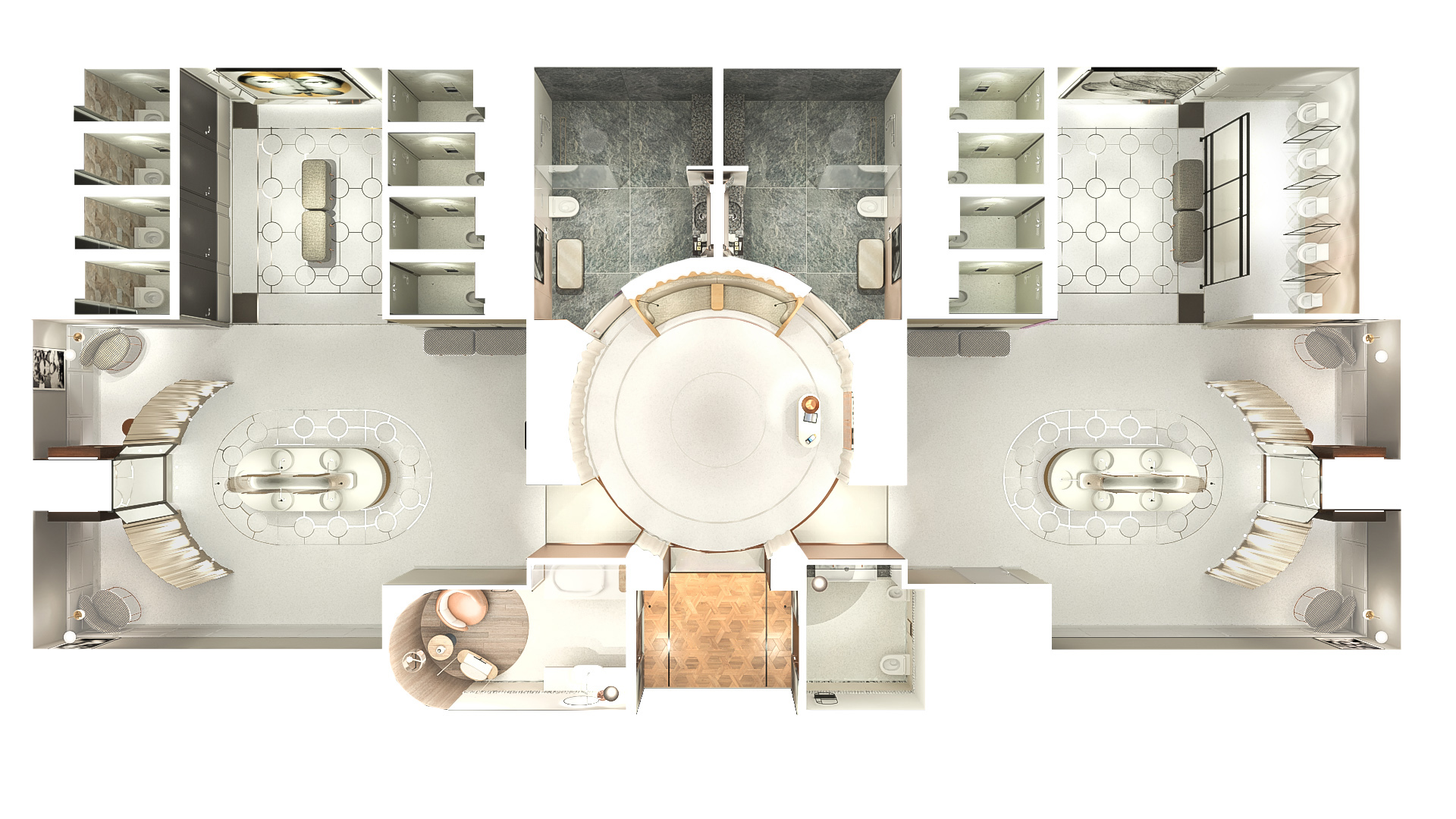


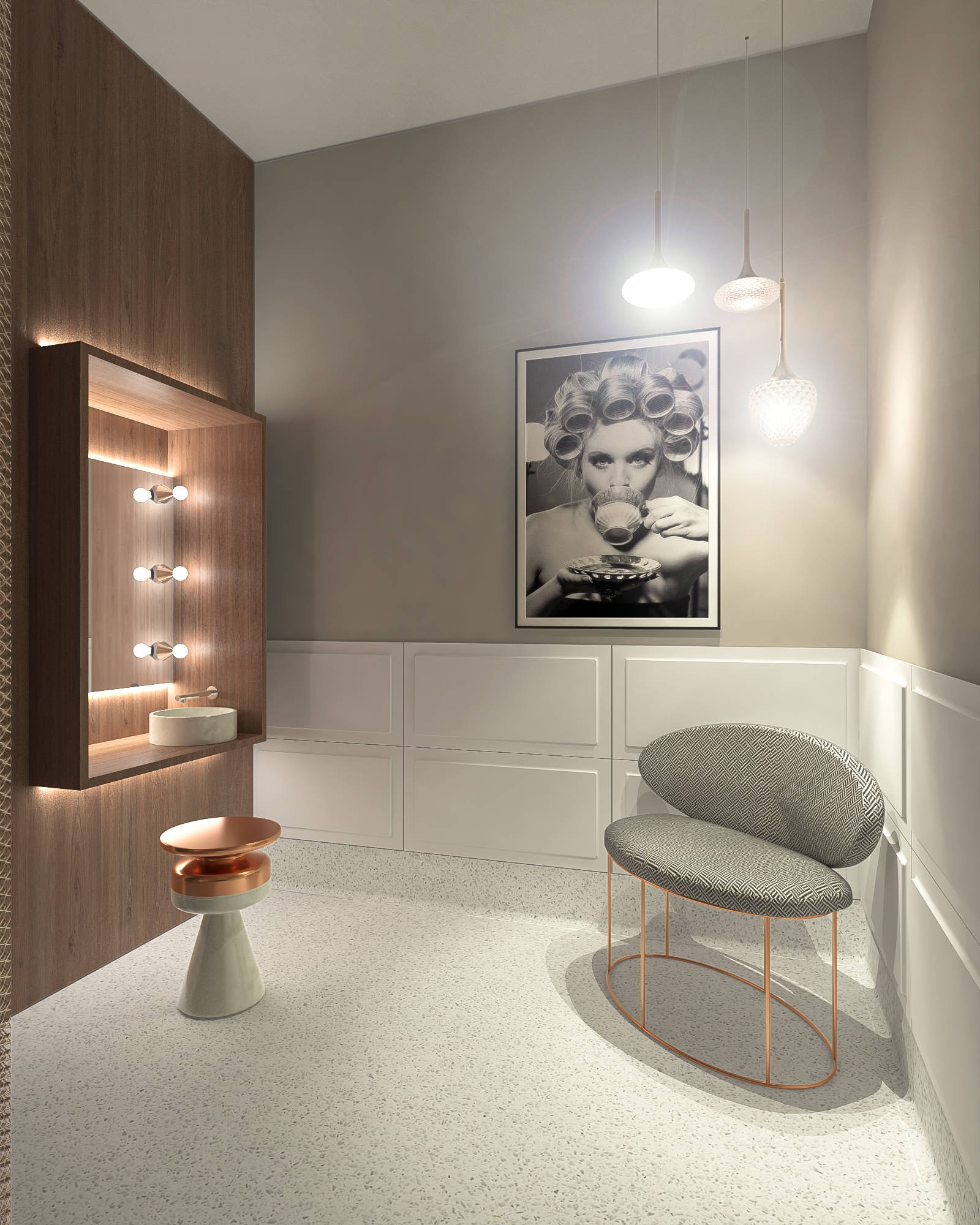

A utility space is still an experience
The brief combined constraints that often compete: fluid circulation, hygiene, intensive use and a sense of comfort. Instead of treating the sanitary area as a collection of standard fixtures, we designed it as part of the wider passenger journey.
Use movement to organise the room
We chose a central washbasin island as the organising element. Its circular geometry made routes more legible, opened movement around the space and created a clear shared focal point.
Design the moments people actually notice
Inside the cabins, I designed a wall-mounted valet that gives passengers a dedicated place for coats and personal belongings. It is a deliberately simple intervention, but one that improves both hygiene and comfort in a highly constrained space.
Extend the space into a service
I also developed “Shower Land”, a bookable private shower concept for travellers. This shifted the proposal beyond interior design: the physical environment became the foundation for a service answering a concrete need during long journeys and layovers.
Outcome
The proposal was not selected by Groupe ADP.
Its value in this portfolio is therefore not a claim of market impact, but the design reasoning it demonstrates: reading movement, hygiene and comfort as experience problems; translating them into spatial and product decisions; and extending a physical environment into a service.
It remains one of the clearest examples of how my industrial design background informs a broader approach to experience design.